Cryopreservation is not a switch flipped from life to preservation. It is a race, and the starting gun is the moment the heart stops.
Between that moment and the point where molecular motion effectively ceases, destructive chemistry is running. It does not pause. Everything else about the procedure is shaped by that one fact.
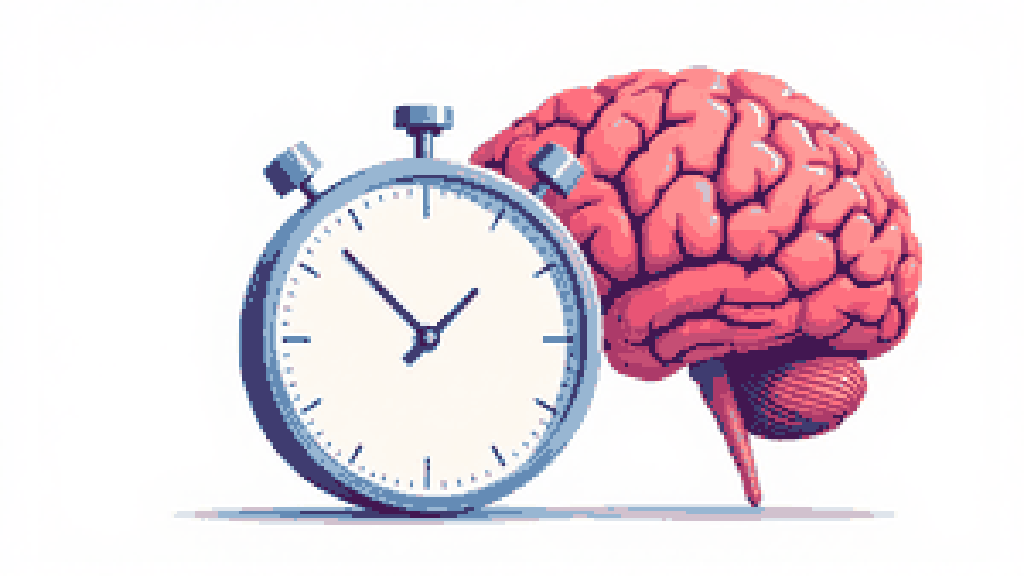
What the clock is actually counting
Your brain is metabolically expensive. It is about 2% of your body weight and burns roughly 20% of your oxygen.
That energy is not spent on thinking. Most of it goes to holding cells in working order, pumping ions across membranes against their own gradients.
Stop circulation and the supply vanishes in seconds. Neurons run out of oxygen and stop firing almost immediately.
Within minutes the reserves are gone. The pumps fail, the electrical balance collapses, and a flood of neurotransmitters spills into the surrounding tissue.
An emergency metabolism acidifies everything. Calcium pours in where it does not belong. Enzymes that dismantle cell components are released from the compartments holding them.
Over tens of minutes to hours, depending heavily on temperature, the organized architecture of the tissue slides toward molecular disorder.
This cascade has a name: ischemia. It is the enemy of the first hour, and it erases the structure described in memory, identity and the brain.
Notice the shape of the problem. We are not fighting an abstraction called death. We are fighting a specific, measurable, well-documented sequence.
Cold is the only brake we have
Chemical reaction rates roughly double for every 10°C you add, and roughly halve for every 10°C you take away.
Stack enough halvings and the effect stops being incremental. At body temperature you have minutes before serious damage accumulates.
At refrigerator temperature, hours. At dry-ice temperature, days. At the -196°C of liquid nitrogen, effectively millennia.
So every protocol is organized around cooling the brain as fast as circumstances allow. Cold is the brake on the entire cascade.
Cooling cannot be reckless. Drop tissue too crudely and you trade one kind of damage for another, including the ice the procedure exists to avoid.
There is a second reason the cold matters. Cryoprotectants are toxic at the concentrations vitrification requires.
Their toxicity falls steeply as temperature drops, for the same reason all the other chemistry does. So perfusion is run close to 0°C.
That buys tolerance to the agents at a price. Cold also slows how fast they spread into tissue, so the race contains a second race.
Get the protectant in before too much decay accumulates, and slowly enough not to poison what you are trying to save. Neither half can be won outright.
The whole sequence, from arrival through cooldown to cryogenic temperatures, is a series of these trades made under time pressure.
The line between damage that hides and damage that erases
Not all damage is equal, and this is the most important idea on the page.
From an information standpoint there are two categories. Damage can obscure structure, or it can destroy it.
A neuron may be battered and completely non-functional. If its connections remain identifiable, the information it carried is in principle still there.
Once a cell has ruptured and its connections have scattered into unidentifiable debris, the information is gone. No future technology recovers what randomness erased.
So this is not a race to avoid all harm. It is a race to stop before the harm crosses from the first category into the second.
That distinction is why an imperfect preservation is still worth performing, and why preservation quality is a spectrum rather than a verdict.
The idea has a formal name: information-theoretic death. It is the point where the information defining a person can no longer be recovered even in principle.
That is a much later line than clinical death, which is simply the point where a heart will not restart on its own.
Cryonics is the claim that the gap between those two lines is real, and that a body placed in the cold sits inside it rather than past it.
It also sets the standard for measurement. The field now tries to quantify exposure directly, through work like the S-MIX metric.
You cannot manage what you refuse to measure. A number describing how much ischemia a case involved is worth more than a reassurance that it went well.
The frictions we cannot engineer away
Several limits sit on top of the biology, and honesty requires naming them.
The first is the legal-death paradox. The best biological moment to begin would be before legal death, and beginning then would be homicide.
So we wait, knowing the wait costs fidelity. That constraint is permanent and correct, and it has its own article.
The second is the autopsy problem. Some deaths legally require an autopsy first, which both delays preservation and damages the brain directly.
Those cases, and the others where preservation cannot proceed, are set out in when you cannot be cryopreserved.
The third is geography. No amount of money puts a team instantly everywhere, so where you die shapes how well you can be preserved.
A death anticipated in hospice lets standby begin at the right second. A sudden cardiac arrest far from a team inserts hours.
What can be controlled is controlled: team positioning, clinician education, and the transport logistics that decide how fast a patient reaches the facility.
None of this is a flaw in the science. It is friction between biological urgency and the physical world, and it is why quality genuinely varies between patients.
Why run it at all, given the frictions? Because the alternative guarantees the worst outcome and the attempt does not.
Preservation under poor conditions still holds more information than burial or cremation, which hold none. That is the arithmetic of a small chance against zero, applied to the first hour instead of the far future.
TL;DR: Cellular damage begins quickly after circulation stops. Rapid standby, cooling and stabilization reduce this damage, but delays can permanently lower preservation quality.
Explore this practical tool
Use the interactive tool to examine the question in this article.
Loading the interactive tool...
Further reading